Inside, Outside or Injected: Three Ways to Dry a Columbus Basement
Basement waterproofing comes in three basic forms, and most Columbus basements need only one of them. Which one depends on where the water gets in, the wall material, and how much room the lot leaves for digging.
Interior drain tile with a sump relieves water under the floor and costs $2,000–$6,000 for a typical system; sealing the outside of the wall costs $7,000–$15,000 (This Old House, 2026). Crack injection seals one leak in a poured wall for $250–$1,000 (Fixr, 2026).
Interior drain tile: how the inside route works
The installer removes a strip of floor along the walls, lays perforated pipe in stone beside the footing and runs it to a lidded pit where a pump lifts the water outside. In block walls, weep holes in the bottom course let trapped water out of the hollow cores. Columbus Building and Zoning Services sets out how it wants these systems built: the drain pipe has to run continuously to the pit at a positive pitch or at least level beside the footing, the system is inspected against the details on the approved plans, and once inspected it cannot be altered or removed (Construction Industry Communication #34). The rim of the pit may now sit flush with the basement floor.
Why the inside route suits Columbus soils
Water in saturated soil presses on the wall and pushes up under the slab; the trade calls it hydrostatic pressure. Bennington soils, common across the county, keep perched water within a foot of the ground through the cold half of the year (USDA NRCS), and a basement floor sits 7 or 8 feet down. Drain tile does not try to keep that water away from the wall. It gives the water a way out before it builds pressure, which is why it works on block walls that water passes straight through.
Exterior excavation: when digging pays for itself
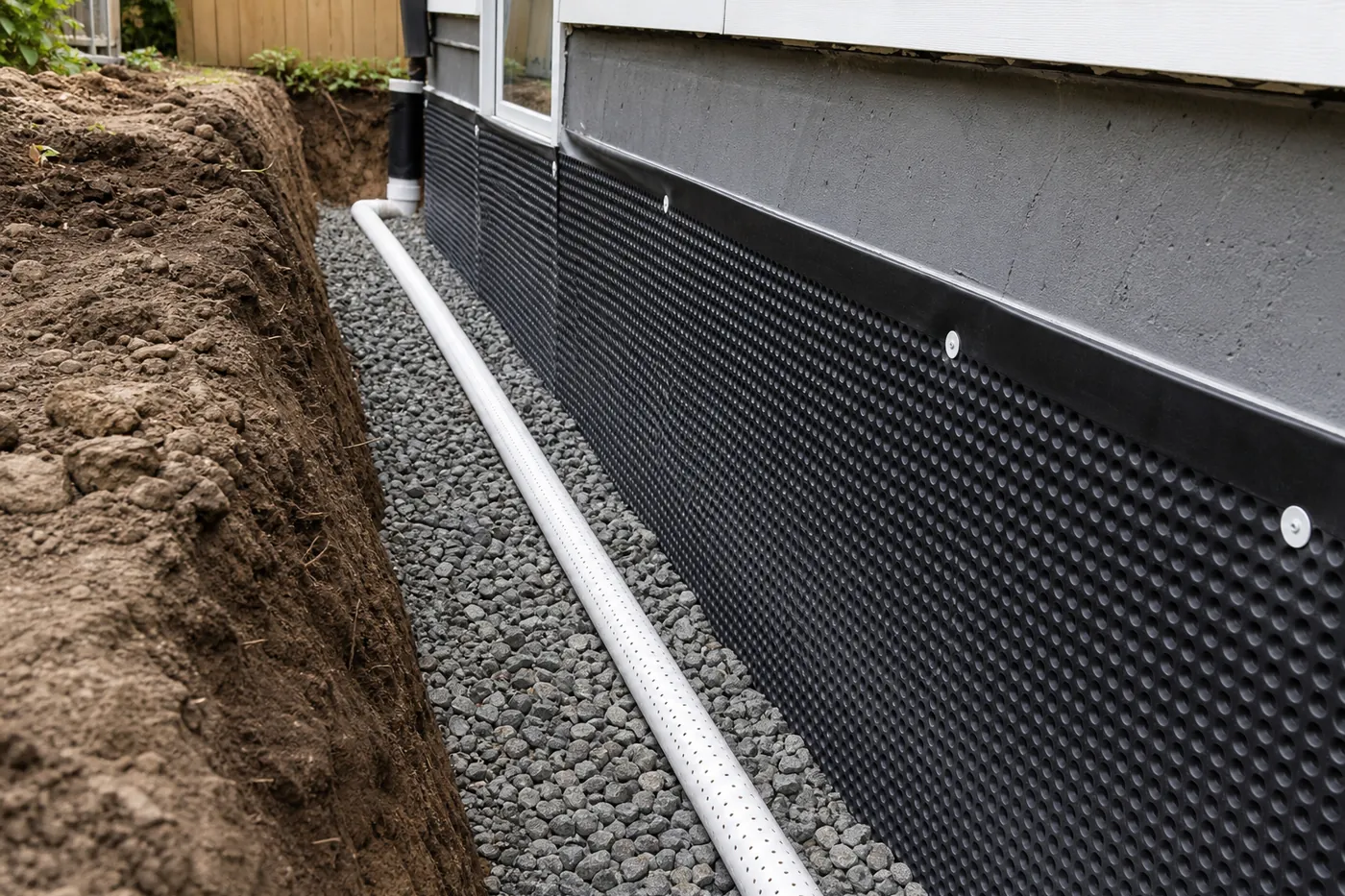
Digging out to the footing lets the installer clean and repair the wall, apply a membrane or drainage board and lay new drain pipe in stone at the base. It keeps water out of the wall rather than catching it inside, which matters where block is crumbling or a basement will be finished. On a house from before the 1960s, the old footer drain may be tied to the sanitary sewer, so ask where the new drain will empty. The city's inspection sequence calls for waterproofing and drainage tile to be inspected before a wall is backfilled.
Crack injection: one wall, one leak
A single vertical crack in a poured concrete wall that darkens after rain is the classic case. Epoxy or polyurethane is pushed into the crack under pressure from inside and seals it through the wall. Per crack, Fixr (2026) lists $250–$1,000 and This Old House (2026) a higher $800–$1,500. Hollow block walls are a poor fit for injection, and a crack that is widening needs the basement wall crack page first.
Interior or exterior waterproofing: a quick decision guide
- Water only after downpours, near one corner: fix gutters, downspouts and grading first.
- A wet line along the floor seam, on several walls: interior drain tile and a sump.
- One damp crack in a poured wall: injection.
- Crumbling block, or a basement about to be finished: weigh exterior work.
- Water rising from the floor drain: a sewer question, not a waterproofing one.
Each option, priced, is in the Columbus basement waterproofing cost guide.
Questions homeowners ask
Does interior drain tile mean tearing up the whole floor?
No, only a strip along the walls being drained, usually about a foot wide, plus the spot for the pit. The rest of the slab stays. The trench is refilled with concrete after the pipe is inspected. In a finished basement, the lower part of the drywall and any flooring along those walls has to come out first.
What is the basement doing?
Tell it the way you would tell a neighbor: water along the back wall after every downpour, a floor drain that gurgled up in August, no sump pit at all. One independent basement specialist who works around Columbus reads it and gets in touch.